‘Weed Cloth’ is not what you think it is.
If you are looking for a way to keep weeds out of your garden or landscape, you might have heard of weed cloth or barrier. However, this term is misleading and does not accurately describe what this material is and what it does. In fact, weed cloth is not a cloth at all, but a type of geotextile fabric that has many other uses and benefits besides weed control. In this blog post, we will explain what geotextile fabric is, how it works, and why it is not effective as a weed barrier.
What is geotextile fabric?
Geotextile fabric, also known as landscape fabric, is a permeable material made of polymer fibers such as polypropylene or polyester. These fibers are processed through various methods such as hot pressing and needling, gluing, and weaving to create a fabric-like structure. Geotextile fabric can endure a wide range of extremities and is long-lasting.
Geotextile fabric has many applications in civil engineering, construction, agriculture, and landscaping. Its primary purpose is to separate layers of gravel from soil and prevent gravel from sinking into the soil. This helps to maintain the integrity of the soil structure and prevent soil erosion. It is also used to reinforce the soil and provide stability to the ground. Geotextile fabric can also act as a filter, allowing water to pass through while blocking sediments and contaminants. Additionally, certain geotextile fabrics can serve as a moisture barrier, preventing water from seeping into the soil and causing erosion.
Does geotextile fabric stop weeds?
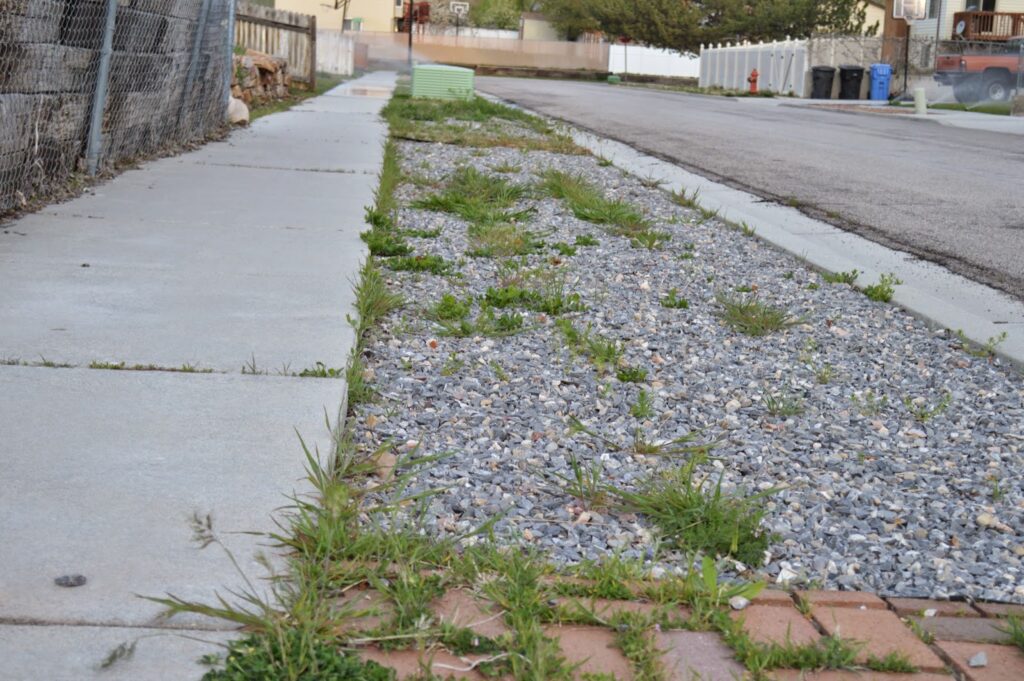
While initially geotextile fabric can help slow the spread and rate of growth of weeds, it is not meant to keep weeds out entirely.
It does not stop vegetation from growing through it. Weeds can still germinate on top of the fabric or penetrate through the pores of the fabric. An added negative of this is that it makes weeding almost impossible as the roots are tied into the fabric and will just regrow after the upper plant is removed.
What are the types of geotextile fabric?
Geotextile fabric comes in two basic forms: woven and non-woven.
Woven geotextiles: These are made by weaving together individual threads of polypropylene or polyester fibers. They are strong and durable, making them ideal for use in applications that require high strength and stability.
Non-woven geotextiles:In contrast these fabrics are made by bonding together individual fibers using heat or chemicals. They are more flexible than woven geotextiles, making them ideal for use in applications that require flexibility and conformability.
Both types of geotextiles have their advantages and disadvantages depending on the specific needs and conditions of the project.
Woven geotextiles have higher tensile strength and lower elongation than non-woven geotextiles, meaning they can resist more force and deformation. However, woven geotextiles have lower permeability and porosity than non-woven geotextiles, meaning they allow less water and air to pass through. Non-woven geotextiles have higher permeability and porosity than woven geotextiles, meaning they allow more water and air to pass through. However, non-woven geotextiles have lower tensile strength and higher elongation than woven geotextiles, meaning they can resist less force and deformation.
What are some drawbacks of using geotextile fabric?
Geotextile fabric is not without its drawbacks. One of the main disadvantages of using geotextile fabric is that it is not biodegradable.
Being poly materials, these fabrics last a long time and when they do break down they are difficult to remove and leave microplastics in the soil. This can have negative impacts on the environment and wildlife.
Another disadvantage of using geotextile fabric is that it can interfere with the natural processes of the soil such as nutrient cycling, microbial activity, and organic matter decomposition. This can affect the health and fertility of the soil.
How does weed cloth affect your garden layout?
Weed cloth can negatively affect your garden layout in several ways.
- First, it can make it harder to dig new holes for planting new plants or transplanting existing ones. You will have to cut through the fabric with a sharp tool such as a knife or scissors, which can damage the fabric and create gaps for weeds to grow through. You will also have to remove the excess fabric and dispose of it properly, which can be wasteful and harmful to the environment.
- Second, weed cloth can limit your plant choices and diversity. Some plants may not thrive well with the fabric barrier, especially those that need deep roots or prefer moist soil. The fabric can also prevent beneficial organisms such as earthworms and microbes from reaching the soil and improving its quality. This can affect the health and fertility of the soil and reduce its ability to support a variety of plants.
- Third, weed cloth can reduce your flexibility and creativity in designing your garden. You will have to stick to the original layout that you created when you installed the fabric, which may not suit your changing preferences or needs over time. You will also have less room for experimentation and improvisation, as you will have to plan ahead and cut holes in the fabric for every plant you want to add or move. This can make your garden look rigid and boring, rather than dynamic and lively.
What are some alternatives to weed cloth?
If you want to avoid using weed cloth in your garden or landscape, there are some alternatives that you can try. Some of these alternatives are:
- Mulching: Mulching is covering the soil with organic materials such as wood chips, straw, leaves, grass clippings, or compost. Mulching can help suppress weeds by blocking sunlight and creating a physical barrier. It can also help retain moisture, regulate temperature, add nutrients, and attract beneficial organisms to the soil. Mulching can be done regularly throughout the year to maintain its effectiveness.
- Dense Planting: Dense planting involves filling the space with plants that can outcompete weeds for resources such as light, water, and nutrients. Planting can help create a dense and diverse canopy that can shade out weeds and prevent them from germinating. Planting can also help improve the appearance and function of your garden by adding color, texture, fragrance, and wildlife value. Planting can be done according to your design preferences and needs.
- Weeding: Weeding is manually removing weeds from the soil by pulling them out by hand or using tools such as hoes, trowels, or forks. Weeding can help eliminate weeds before they become established and spread seeds. Weeding can also help prevent weeds from competing with your desired plants for resources and space. Weeding can be done periodically throughout the year to keep your garden clean and tidy.
Conclusion
Geotextile fabric is a versatile material that can be used for a variety of applications such as separation, stabilization, reinforcement, filtration, moisture barrier, and drainage. While it is not meant to keep weeds out entirely, it works great for separating layers of gravel from soil and preventing gravel from sinking into the soil.
However, geotextile fabric is not effective as a weed barrier. It does not stop vegetation from growing through it. It also has some drawbacks such as being non-biodegradable and affecting the soil quality. Therefore, it is important to understand what geotextile fabric is, how it works, and what its limitations are before using it in your garden or landscape.